
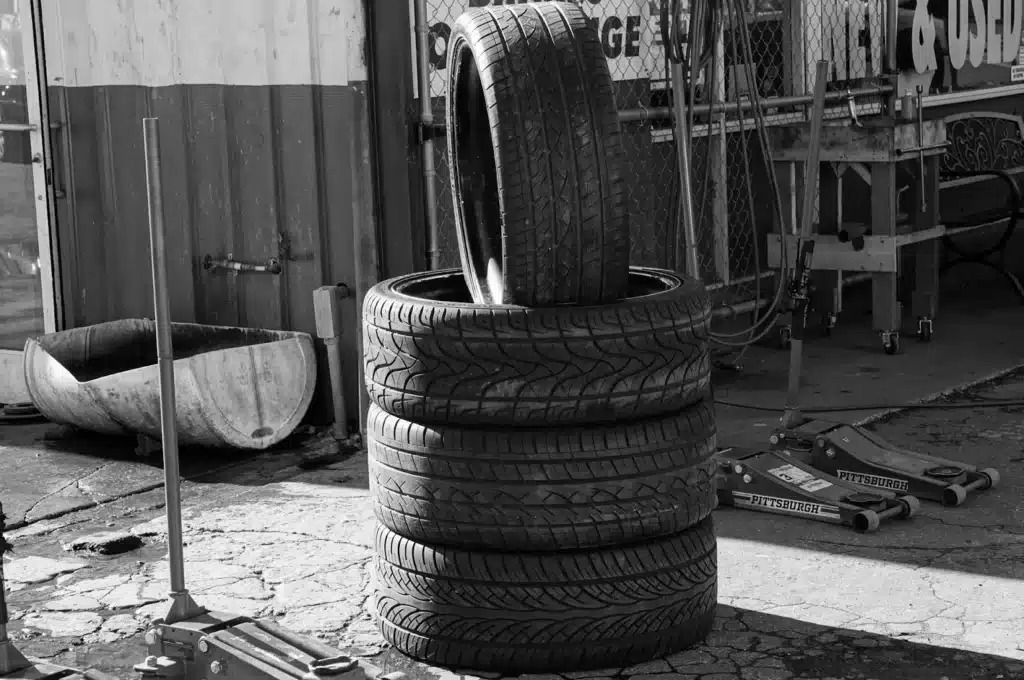
Your tires play a crucial role in how your vehicle handles, stops, and maintains traction on the road. Since tire wear develops gradually, it makes it difficult for the average driver to notice subtle declines in handling, even as they become more obvious. Tires don’t last forever, leaving many to wonder when tires need to be replaced.
At Welsh Automotive, we know just how important healthy tires are to your vehicle’s ability to maintain traction and control. That’s why we’ve created our expert guide to make sure that you know exactly how to tell when your tires need to be replaced long before they have the chance to cause any problems.
When Do Tires Need to Be Replaced?
When it comes to tires, there isn’t one ideal mileage interval or time period that works perfectly for everyone. A tire’s lifespan varies drastically based on the type of tire, your driving habits, road conditions, inflation pressure, alignment, maintenance, and the vehicle itself.
Tread depth is one of the most useful measurements to consider when trying to answer this question. In Pennsylvania, tires must have at least 2/32 of an inch of tread depth to meet state inspection requirements, so if your car recently passed inspection, you’re probably fine.
However, insufficient tread depth isn’t the only thing that determines when to replace your car tires. Tires can also require replacement because of physical damage, irregular wear, or age, regardless of how much tread remains.
How Can You Tell When Your Tire Tread Is Too Low?
Tire tread helps your vehicle maintain contact with the road and channel water away from the contact area. As that tread wears down, the less available depth your tires will have to perform as they should, especially on wet roads.
If you’re wondering how to tell when tires need to be replaced, checking tread depth is one of the easiest places to start.
How to Check the Tread Depth
The easiest and most accurate way to measure tread depth is with a tread-depth gauge, which is a tool that provides a simple way to measure your tires’ remaining tread. But you don’t necessarily have to invest in a new tool if you don’t have one already.
If you have a penny lying around, you can also use that to perform a quick test at home. Just place a penny into a tread groove with Lincoln’s head facing downward, and if the top of his head is visible, the tread is around or below 2/32 of an inch.
Regardless of which tool you use, it’s essential that you check several areas across each tire and not just one. Tires don’t always wear perfectly evenly, especially if you don’t keep up with regular tire rotations, so checking only one spot simply isn’t enough to determine whether or not your tires need to be replaced.
What Other Signs Can Mean Your Tires Need Replacing?
Tread depth is important, but it only tells part of the story. Tires can also develop physical damage or irregular wear patterns that call for professional attention before the tread reaches its minimum depth.
Cracks, Bulges, or Visible Damage
Visible damage like cracks, bulges, punctures, bubbles, or exposed cords are all signs that your tires need some professional attention. But visible damage doesn’t always mean that replacement will be necessary.
Some punctures can be repaired depending on their size and location. It’s more notable damage to particular parts of the tire, like the sidewall, that usually requires replacement.
Uneven or Irregular Tread Wear
Tires can also wear unevenly, which is another big sign that your tires might need replacement. Excessive wear along the inner or outer edge, down the center, or in isolated areas can all negatively affect your tires’ performance and can mean that something is off.
There’s no shortage of issues that can cause this problem, from incorrect tire pressure and improper wheel alignment to worn suspension components and missed rotations. But regardless of what caused the uneven wear, if this happens to your tires, it’s probably time for an inspection and potentially a replacement.
Changes in How Your Car Drives
You should also pay careful attention to how your vehicle drives from week to week. New vibrations, pulling to one side, changes in handling, or reduced traction in wet conditions can all be symptoms of excessive tire wear or damage.
These symptoms can also have other causes, so it’s hard to know for sure without a professional inspection. But the good news is that our professional tire services in Exton and West Chester are here to help.
Does the Age of a Tire Matter?
Yes, the age of a tire matters too. Tires deteriorate with age regardless of mileage or remaining tread depth, and factors like heat, sunlight, weather exposure, and storage conditions can all cause a tire to wear over time.
Tire manufacturers provide recommendations regarding inspection and replacement as tires age, and following this guidance is a lot more useful than relying on tread depth alone. But if you drive regularly, it’s a lot more likely that you will need to replace your tires long before age becomes an issue.
Can Regular Tire Maintenance Help Tires Last Longer?
Proper maintenance is always the best way to get more consistent tire wear and help you reach their maximum service life. Maintaining the recommended inflation pressure, scheduling routine tire rotations, and addressing any wheel alignment and balancing issues that arise are all essential when it comes to getting the most out of your tires.
Get Your Tires Checked at Welsh Automotive
Are you ready to change your vehicle’s tires, or simply wondering if or when your tires might need to be replaced? Give us a call.
At Welsh Automotive, we provide comprehensive tire services at both our Exton and West Chester locations. With ASE-certified technicians, free loaner vehicles, and an in-house warranty, you can count on us to give you the expert advice and services you need to keep you and your vehicle safe and efficient out on the road.
Contact Welsh Automotive and schedule your next tire service at our Exton or West Chester shop today.