
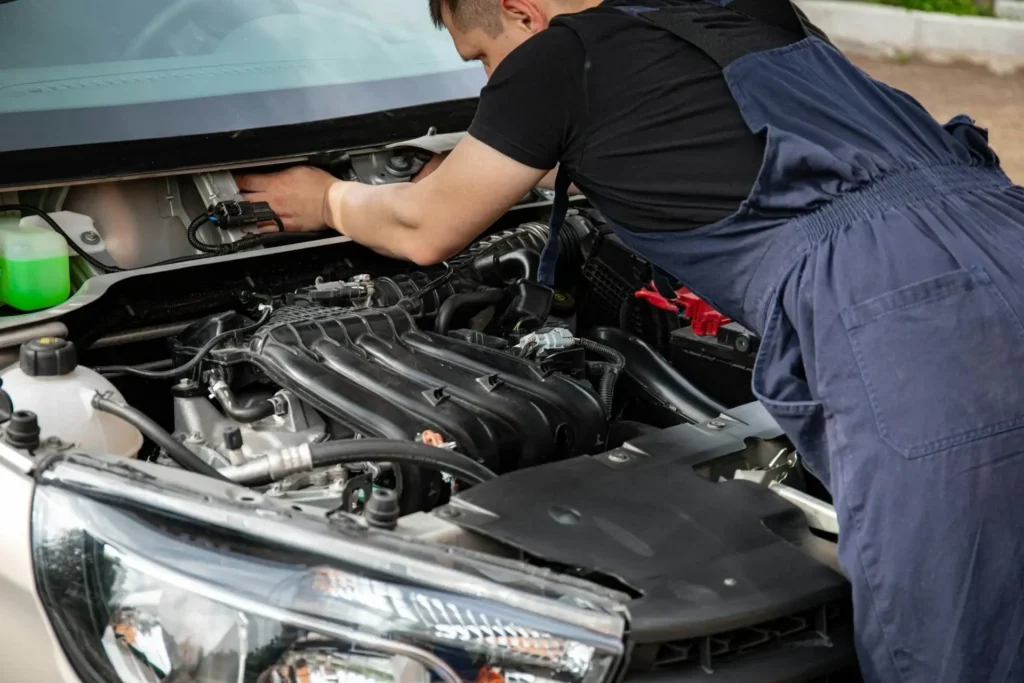
Your vehicle’s engine produces a lot of heat as you drive, but if all goes well, its cooling system will keep everything cool enough to prevent overheating and avoid damage. However, coolant leaks are some of the most common issues that drivers face, and if this happens to your vehicle, the next step should always be calling an auto coolant leak repair professional.
At Welsh Automotive, we help drivers in the Exton and West Chester areas identify and fix cooling system problems before they get out of hand. Still, we know it can be difficult to know when it might be time to come in for a visit. So, if you suspect that you might be having coolant leak problems, here is everything you need to know.
What Does Coolant Do for Your Vehicle?
How the Cooling System Controls Engine Temperature
Your vehicle’s cooling system circulates coolant through your engine and radiator, where it absorbs and transfers heat away from the many critical components your car relies on. This process is important because it keeps your engine operating within a safe temperature range to prevent damage during daily driving.
This system includes several important parts, like the radiator, water pump, thermostat, hoses, and coolant reservoir, all of which have their own role to play. The problem is that all it takes is one tiny leak in any of these components to make it a lot harder for the system as a whole to do its job.
Why Coolant Leaks Should Be Taken Seriously
As soon as coolant levels start getting low, the temperature inside your engine will rise, leading to worse performance, reduced efficiency, and potential damage from overheating. The longer the problem persists, the worse the potential damage can be, so if you do notice that your coolant levels are getting low, it’s extremely important to try to fix the issue as quickly as possible.
What Are the Most Common Signs of a Coolant Leak?
Rising Engine Temperature
One of the first and most obvious signs of a car coolant leak is rising engine temperatures. If you notice the engine temperature gauge is reading hotter than normal, or one of your dashboard warning lights starts turning on, it’s most likely a coolant issue that’s to blame.
Fluid Under Your Vehicle
Another easy sign of leaks is visible puddles that form after you park and leave your car for a while. The problem with this is that there are plenty of different fluids that your car could leak at any point, and even coolant itself comes in a wide variety of colors, including green, orange, yellow, and pink.
This means that seeing puddles isn’t necessarily a telltale sign that the cooling system is the issue. However, it is always a sign that something needs repair, and if the puddles coexist with any of the other warning signs, it’s most likely coolant that’s forming them.
Constantly Low Coolant Levels
Your cooling system is sealed, so if everything is working properly, coolant levels should stay relatively consistent no matter how much you drive. In fact, in most modern vehicles, coolant is something that you should almost never need to refill, so if you do, it almost certainly means that your car has a coolant leak.
What Causes Coolant Leaks?
Worn or Damaged Hoses
Worn and damaged hoses are by far the most likely culprits when it comes to coolant leaks. These rubber hoses experience constant high heat and pressure, and over time, they can start to crack, swell, and weaken to the point that they start to leak.
Radiator Problems
Radiators are also a source of potential leaks, especially in places like Pennsylvania, where cold winters and road salt can accelerate rust and corrosion. Radiators, like all components of the cooling system, also handle constant high heat and pressure, so even minor cracks from hitting debris or general wear can become leaks if left unchecked.
Water Pump Failure
The water pump is what’s responsible for circulating the coolant throughout the entire system. If the seals around this pump wear out, coolant starts leaking out of the pump housing, leading to coolant loss and potential overheating. You may even start to hear odd noises if this is the specific issue your car is experiencing.
Cracked Coolant Reservoir
The coolant reservoir is basically just a plastic container, quite similar to the one that holds your windshield wiper fluid. The only difference is that this reservoir stores the coolant that flows through your vehicle. This means that all it takes is one little crack, and you could have a major coolant leak on your hands overnight.
When Should You Schedule an Auto Coolant Leak Repair Appointment for Your Car?
Small Leaks Can Quickly Become Larger Problems
If you notice a coolant leak, you should do your best to contact a professional who can repair your car’s coolant leak as soon as possible. Though a small leak won’t break your car overnight, minor leaks today always have the potential to turn into major repairs tomorrow.
Warning Signs That Need Immediate Attention
If you notice steam coming from under your hood, rapid coolant loss, or repeated overheating, these are all signs that you need to take your car to a professional technician to repair the auto coolant leak immediately.
Contact Welsh Automotive Today
Are you looking for a local automotive technician that you can trust with all your car coolant leak repair needs? Give us a call at (610) 524-5437 or request an appointment on our website.
Our team is always here to answer questions and will happily help you schedule whatever services you need to keep your vehicles in peak working condition. Plus, with convenient locations in both Exton and West Chester, chances are that we have a location that’s close and convenient for you.
Contact Welsh Automotive and schedule the coolant leak repair you need for your car today.